It’s Deeper Up Here!
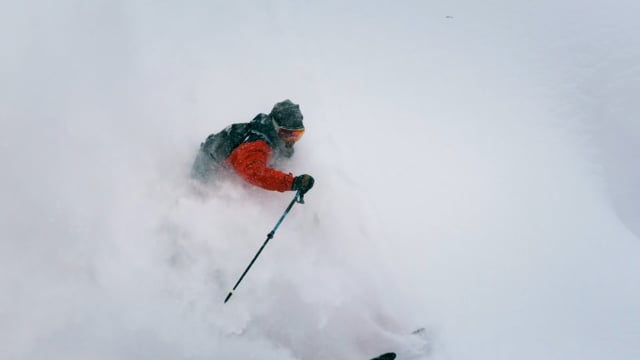
You came to Northern Escape to heli-ski in one of the snowiest mountain ranges on Earth. Our helicopters are always the first choice — whenever conditions allow, that's exactly where you'll be. We regularly fly while it's snowing. Fresh snowfall is part of what makes heli-skiing here so extraordinary.
Occasionally, a Pacific storm delivers so much snow — or visibility simply drops too low — that safe helicopter operations are no longer possible. That's when most heli-ski operations stop skiing. That's when Northern Escape keeps going with its snowcat skiing backup operation.
Heli-skiing is the experience. Snowcats protect it.
Most of your week will be spent beneath the rotor blades, exploring alpine bowls, glaciers, and untouched powder. On average, we use our snowcats for about one day in a typical week — and sometimes not at all. As soon as visibility improves, we're back in the helicopters, often the very same day. The snowcats aren't why you book Northern Escape. They're why an unforgettable heli-ski vacation doesn't become a week spent watching the weather.
So What is Cat Skiing?
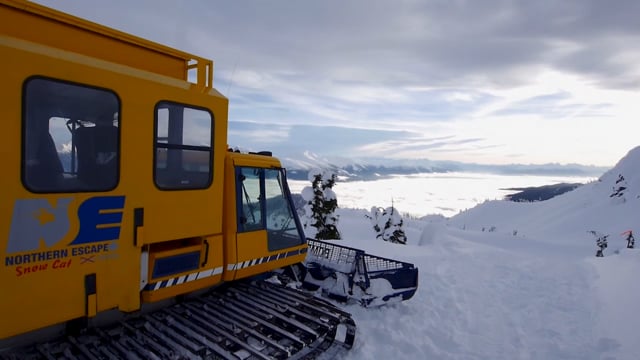
Facilitated by the immense power and flexibility of snowcats, cat skiing allows you to ski fresh tracks while exploring the backcountry. Snowcats, short for snow caterpillar, are enclosed-cab, truck-sized, fully tracked vehicles that are designed for grooming ski resorts, and have been used to shuttle skiers up remote backcountry slopes for years. Northern Escape’s custom-outfitted snowcats will climb up even the most unapproachable terrain with enough space for your ski and snowboarding equipment and everything you’ll need for a day on the slopes.
Cat skiing first appeared as a sport in 1975 when a couple, Allan and Brenda Drury, opened their first cat skiing facility near Meadow Creek, BC. Allan fell in love with the idea of using snowcats to access unexplored peaks and giving people the chance to enjoy new terrain from a different perspective. Soon enough, cat skiing spread throughout the mountains of British Columbia.

Cat Ski Area
Storm Days Often Become the Stories You Tell
Our Catland Ski Area covers 23 km² (5,769 acres) of sub-alpine terrain — roughly the size of Whistler/Blackcomb's full resort boundary, and larger than Vail's entire skiable footprint. Yes, that's our backup ski area. Not bad, eh?!
Our warm and cozy snowcats access over 50 km (31 miles) of maintained snow roads, offering some of the best tree and open glade skiing within our tenure. With runs averaging 600 vertical metres (2,000 vertical feet) through steep trees, glades, chutes, pillow drops and open bowls. It's hardly a downgrade — we've had pro riders and film crews come away genuinely amazed at the quality of our cat skiing. The day moves in both directions: if visibility improves while we're cat skiing, the helicopters come get us; if weather closes in while we're heli-skiing, we meet the cats and keep going. Either way, you ski a full day.
Poor visibility for helicopters doesn't mean poor skiing. In fact, the biggest Pacific storms often deliver the deepest powder of the week. While the alpine disappears into the clouds, Catland comes alive — old-growth forests, protected glades, and endless fresh snow. Many guests arrive hoping they never need the snowcats. Many leave talking about their cat day as one of the highlights of their trip. Because there's something unforgettable about making effortless turns through waist-deep powder while the snow continues falling around you.